Understanding NPK: The Foundation of Plant Nutrition
When you pick up a bag of fertilizer, the first thing you'll notice is three numbers, like 10-20-10 or 46-0-0. These numbers are the NPK ratio, the cornerstone of modern agriculture and gardening. But what do they actually mean, and why should you care?
What Does NPK Stand For?
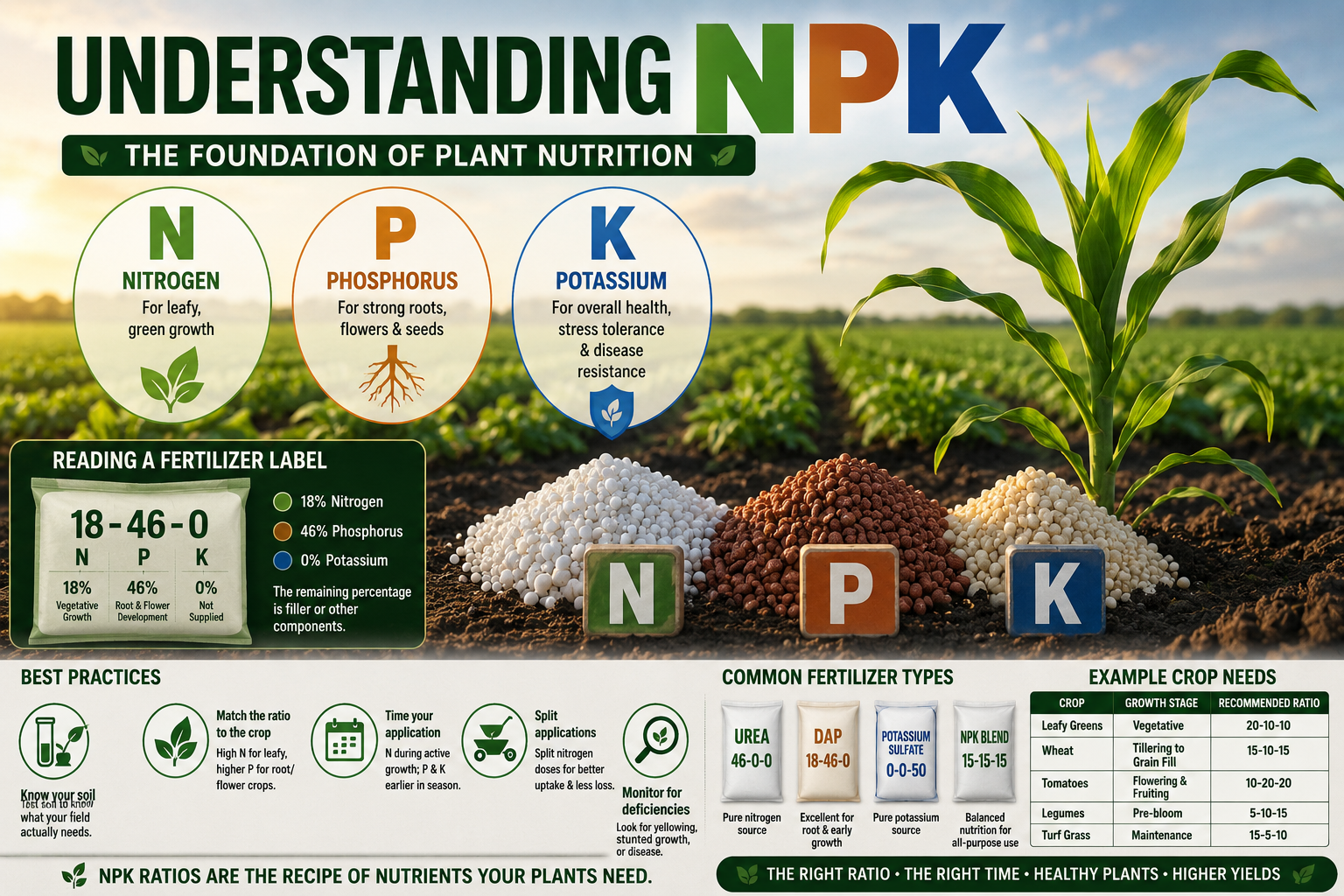
NPK is an acronym for three essential macronutrients that all plants need:
- Nitrogen (N) — the first number
- Phosphorus (P) — the second number
- Potassium (K) — the third number
The numbers represent the percentage by weight of each nutrient in the fertilizer. For example, a 10-20-10 fertilizer contains 10% nitrogen, 20% phosphorus, and 10% potassium by weight.
The Role of Each Nutrient
Nitrogen (N)
Nitrogen is the nutrient responsible for leafy, green growth. It's a key component of chlorophyll, amino acids, and proteins. Plants that need lush foliage — like lettuce, spinach, and grass — benefit from higher nitrogen ratios. However, too much nitrogen without adequate phosphorus and potassium can produce weak, disease-prone plants.
Deficiency symptoms: Yellowing leaves, stunted growth, poor color
Phosphorus (P₂O₅)
Phosphorus drives root development, flowering, and fruiting. It's essential for energy transfer within the plant and helps the plant mature and produce seeds. Root crops, flowers, and fruit trees thrive with higher phosphorus inputs during their critical growth stages.
Deficiency symptoms: Poor root development, delayed flowering, weak seed set
Potassium (K₂O)
Potassium improves plant vigor, disease resistance, and stress tolerance. It regulates water uptake and helps plants handle drought, cold, and pest pressure better. Potassium-rich fertilizers are especially valuable in high-stress growing conditions.
Deficiency symptoms: Weak stems, poor disease resistance, scorched leaf edges
Reading a Fertilizer Label
A fertilizer labeled 18-46-0 tells you:
- 18% Nitrogen — good for vegetative growth
- 46% Phosphorus — excellent for root and flower development
- 0% Potassium — not supplied by this product
The remaining percentage is inert filler, micronutrients, or other components. A 10-10-10 "balanced" fertilizer provides equal amounts of each, suitable for general-purpose use.
Choosing the Right NPK Ratio
Different crops need different ratios at different growth stages:
| Crop | Growth Stage | Recommended Ratio |
|---|---|---|
| Leafy Greens | Vegetative | 20-10-10 |
| Wheat | Tillering to Grain Fill | 15-10-15 |
| Tomatoes | Flowering & Fruiting | 10-20-20 |
| Legumes | Pre-bloom | 5-10-15 |
| Turf Grass | Maintenance | 15-5-10 |
Common Fertilizer Types
- Urea (46-0-0): Pure nitrogen source, commonly used in grain crops
- DAP (18-46-0): Balanced N and P, excellent starter fertilizer
- Potassium Sulfate (0-0-50): Pure potassium source, ideal for potassium-demanding crops
- NPK Blends (15-15-15): Balanced formulations for mixed nutrient needs
Best Practices
- Know your soil: Conduct a soil test to determine what your field actually needs before adding fertilizer
- Match the ratio to the crop: Use high nitrogen for vegetative crops, higher phosphorus for root/flower crops
- Time your application: Apply nitrogen-heavy fertilizers during active growth; phosphorus and potassium earlier in the season
- Split applications: Break nitrogen into multiple doses to reduce loss and maximize uptake
- Monitor for deficiencies: Watch for yellowing, stunted growth, or disease susceptibility
Conclusion
NPK ratios are not mysterious — they're simply the recipe of nutrients your plants need. By understanding what each number means and matching it to your crop's needs, you can optimize yields, reduce costs, and build healthier soils. Start with a soil test, choose the right ratio for your stage of growth, and watch your plants thrive.