Best NPK Ratio for Tomatoes at Every Growth Stage
Tomatoes are honestly one of the most nutrient-demanding crops you can grow — doesn't matter if it's a sprawling field or three pots on your balcony. Get the nutrition wrong and you'll know about it. Yellowing leaves, blossom drop, hard little fruits that taste like cardboard. The whole thing is connected to one number you've probably seen on every fertilizer bag: N-P-K.
This guide breaks it all down — what ratio to use, when to switch, what happens if you get it wrong, and a few things most articles don't bother telling you.
What NPK Actually Means for Tomatoes
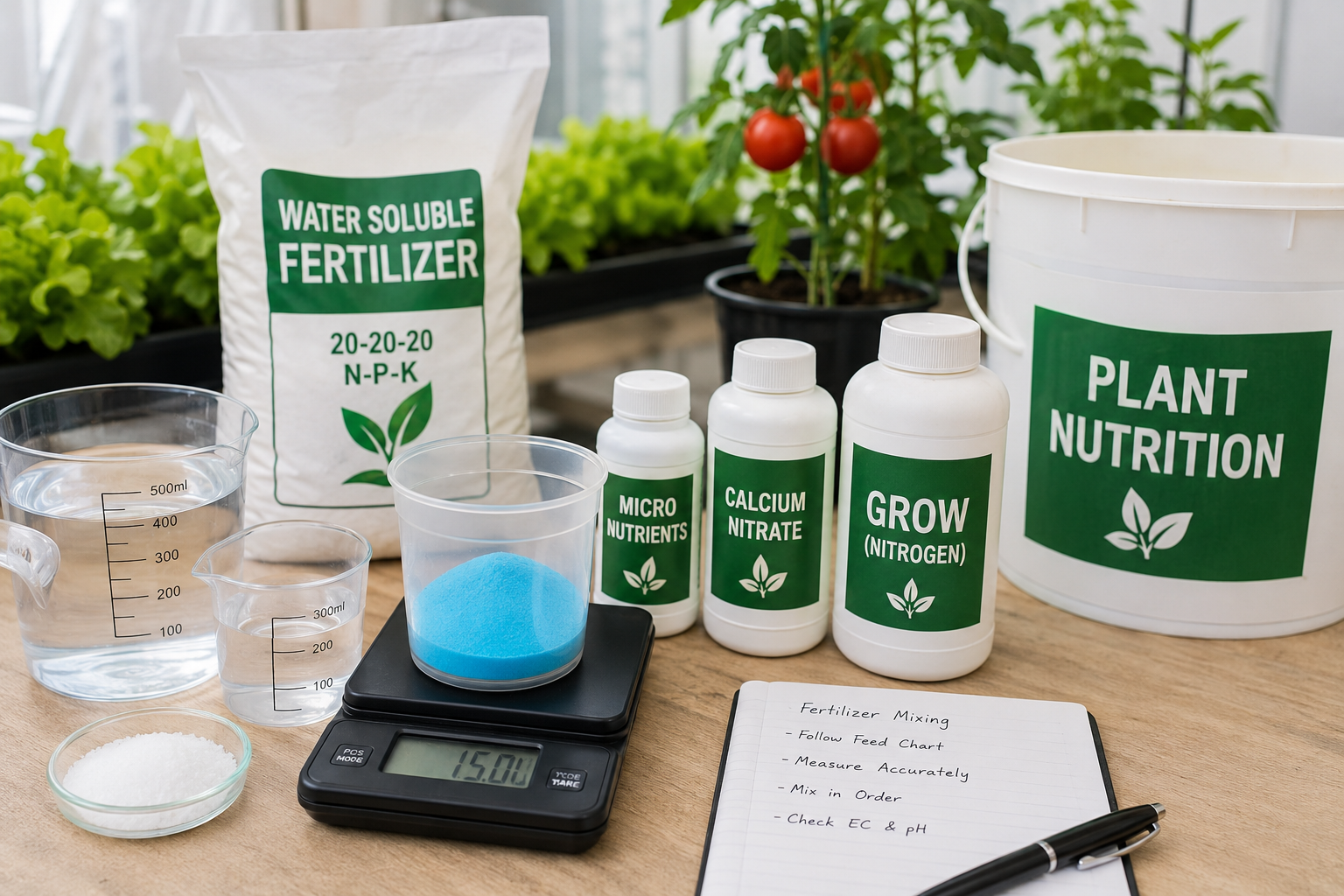
N is nitrogen. P is phosphorus. K is potassium. That three-number code on a fertilizer bag (like 10-10-10 or 5-10-5) tells you the percentage of each nutrient in that product.
Tomatoes need all three — but not in equal amounts, and not at the same time. That's the part people miss. A fertilizer that's perfect during flowering can actually damage your plant during early vegetative growth. So the right question isn't just "what's the best NPK ratio for tomatoes?" — it's "best for which stage?"
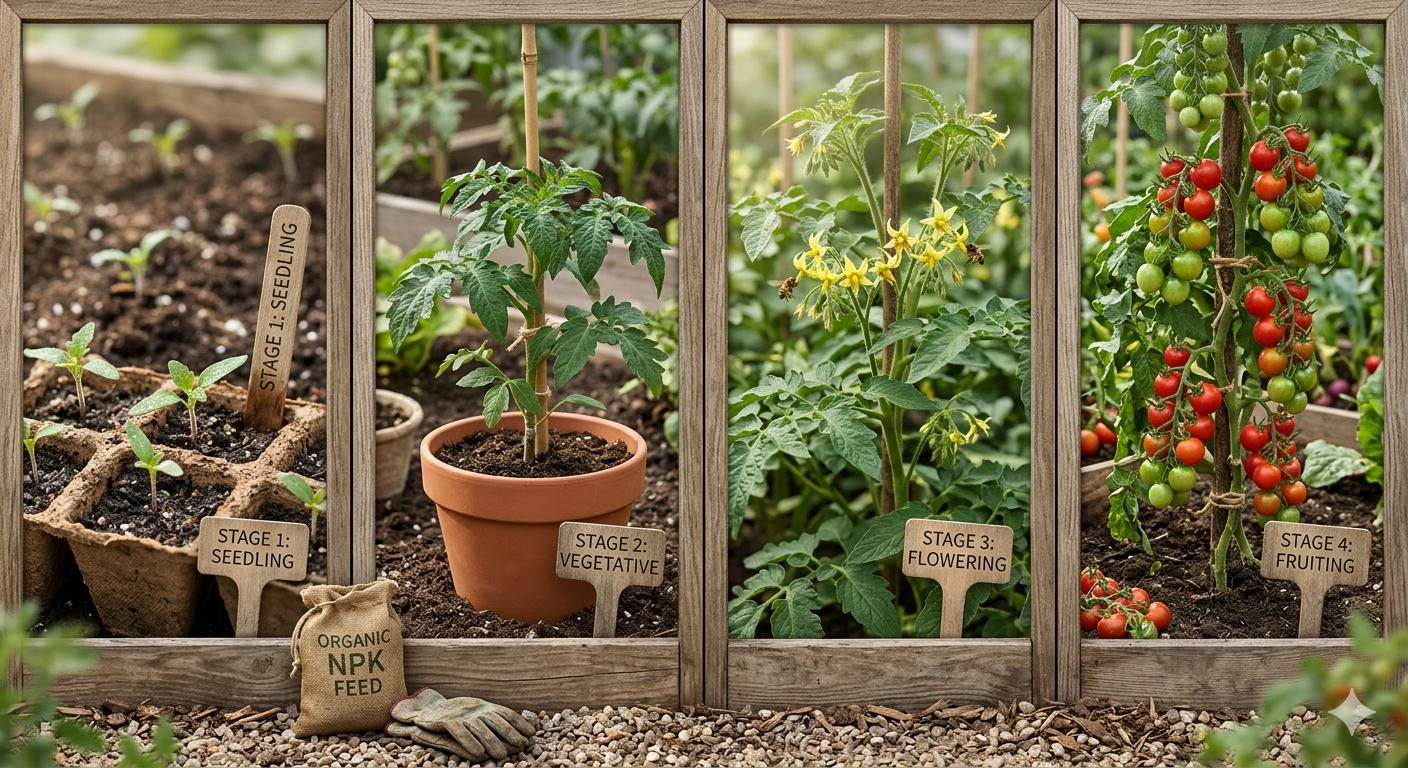
Stage 1 — Seedling Stage: Go Easy on Everything
The NPK for tomato seedling stage should be gentle. Seedlings have tiny root systems and can't handle heavy feeding. Something like a 2-1-2 or 3-1-2 ratio works. Balanced, light.
Nitrogen matters here, but not too much. The seedling needs to establish itself — build roots, strengthen the stem. If you hit it with high nitrogen too early, you get a tall, soft, leggy plant that can't support itself later. And phosphorus, even at low levels, helps root development get going.
A lot of home growers skip fertilising altogether at this stage and just rely on seed-starting mix. That's actually fine for the first two to three weeks. But from week three onwards, a diluted liquid feed (quarter strength at most) is a good habit.
Stage 2 — Vegetative Growth: Nitrogen Takes the Lead
Once your tomato plant is transplanted and actively pushing out new leaves, it enters the vegetative phase. This is when the best fertilizer for vegetative tomato plants contains a higher nitrogen ratio.
Something like 5-2-3 or 8-4-8 or even a 10-5-5 works well here. Nitrogen fuels leaf and stem growth — that dark green, vigorous look you want before flowering starts. Without enough nitrogen at this stage, growth slows, older leaves start going pale, and the plant just looks tired.
But — and this is important — don't overdo it. Nitrogen overload in tomatoes is a real problem. You'll end up with massive lush plants that are basically all leaves and almost no fruit. The plant puts everything into vegetative growth and forgets to flower. So more is not better here.
Vegetative phase typically runs from transplanting until the first flower buds appear. For most varieties, that's roughly four to six weeks depending on conditions.
Stage 3 — Flowering Stage: Phosphorus Steps Up
When flower buds start forming, your feeding strategy needs to shift. The tomato flowering NPK ratio should be lower in nitrogen and higher in phosphorus and potassium.
Something like 5-10-5 or 4-12-4 is what you're after. The high phosphorus fertilizer for tomatoes during this phase encourages strong flower development and helps pollen viability. Phosphorus is directly tied to energy transfer in the plant — it drives root activity and reproductive development.
If you keep feeding high nitrogen at this point, you risk the flowers dropping. Or the plant sets fruit very poorly. It's one of those situations where the expensive mistake is doing too much, not too little.
Switch your fertiliser as soon as you see the first flower truss forming. Don't wait.
Stage 4 — Fruiting Stage: Potassium Rules
Once fruit has set and is sizing up, the potassium-rich fertilizer for tomato fruiting phase begins. Now you want something like 4-8-12 or 3-4-8 — low nitrogen, moderate phosphorus, high potassium.
Potassium does a few things that really matter at this point. It regulates water movement in the plant, which affects fruit size and firmness. It improves sugar content (flavour). And it plays a role in disease resistance. A potassium deficiency in tomato plants at fruiting stage shows up as brown leaf edges, poor fruit fill, and fruit that splits easily.
This is also where calcium becomes a big deal. Tomato blossom end rot calcium deficiency is one of the most common problems growers face — you get that black, sunken patch on the bottom of the fruit. It's not really a soil calcium deficiency in most cases — it's actually a calcium uptake failure caused by irregular watering or excess nitrogen/potassium disrupting absorption. Foliar calcium sprays help, but consistent irrigation matters just as much.
Tomato Fertilizer Schedule — A Rough Guide
Here's how a typical tomato fertilizer schedule looks across the season:
Weeks 1–3 (seedling): Light balanced feed or nothing at all. If feeding, dilute heavily.
Weeks 4–8 (vegetative): Higher nitrogen ratio (e.g., 10-5-5). Feed every 10–14 days with liquid fertiliser or incorporate a slow-release granular at transplanting.
Weeks 9–12 (flowering): Shift to high-phosphorus formula (e.g., 5-10-5). Feed weekly with liquid or every three weeks with granular.
Weeks 13 onwards (fruiting): High potassium feed (e.g., 3-4-8). Continue until about two to three weeks before your expected last harvest.
When to stop fertilising tomatoes: Generally four to six weeks before the end of your growing season, or when the plant has set its final fruit clusters and you just want those to ripen. Late-season nitrogen only delays ripening.
Organic vs Synthetic — Does It Actually Matter?
Honestly, both work. The synthetic vs organic tomato nutrients debate is slightly overblown.
Best organic fertilizer for tomatoes options include blood meal (high nitrogen), bone meal (phosphorus), kelp meal (potassium and micronutrients), and compost. Worm castings are brilliant for early stages — gentle, balanced, and they improve soil structure. Homemade NPK for tomatoes is doable: a mix of compost, wood ash (for potassium), and coffee grounds (mild nitrogen) can actually work reasonably well for home growers.
Organic fertilisers release more slowly, which reduces the risk of burning or overfeeding. But they're less precise — you can't easily say you're hitting a 5-10-5 ratio with a scoop of bone meal and some kelp.
Synthetic fertilisers are more precise and fast-acting. The best liquid fertilizer for tomatoes is often a synthetic like a soluble NPK formula (e.g., Haifa, Compo, or similar brands). For home growers, something like Miracle-Gro Tomato Feed or a generic soluble 10-52-10 bloom booster at the right stage gets the job done.
Slow-release tomato fertilizer — like Osmocote — is worth considering for container growers who don't want to feed every week. A good controlled-release formula lasts three to four months and covers the bulk of the season.
Special Situations: Containers, Cherry Tomatoes, Heirlooms
Fertilizer for container tomatoes needs a bit more attention. Pots drain quickly, nutrients leach out faster, and the plant is entirely dependent on what you give it. Feed more frequently — weekly liquid feeding during fruiting is not excessive in a container. Also check the pH of your potting mix regularly. The optimal soil pH for tomatoes is between 6.0 and 6.8 — outside that range, nutrient uptake suffers even if nutrients are present.
The best NPK for cherry tomatoes is broadly similar to full-size varieties, but cherry types are generally more forgiving. They're vigorous, heavy-setting, and tolerant of moderate feeding inconsistencies. Still — follow the stage-based approach. Skipping stages doesn't work.
For NPK ratio for heirloom tomatoes, be a bit more careful. Heirlooms tend to be less stress-tolerant than modern hybrids. They respond better to organic feeding, lower overall nutrient concentration, and very consistent watering alongside fertilisation.
Nutrient Deficiencies — What to Look For
Tomato plant nutrient deficiencies show up clearly once you know what you're looking at.
Yellow older leaves (bottom of plant) — almost always nitrogen deficiency. Classic sign of tomato plant leaf yellowing fertilizer need. Apply a nitrogen-rich liquid feed and you'll see recovery in about a week.
Purple tinge on leaves and stems — phosphorus deficiency. Common when soil is cold (phosphorus uptake drops below 10°C). Warm the soil or use a foliar phosphorus spray.
Brown leaf edges starting from tips — potassium deficiency. Especially visible on fruiting plants. Switch to a high-K formula.
Yellowing between leaf veins (interveinal chlorosis) — usually a magnesium or iron deficiency, which falls under micronutrients for healthy tomatoes. Epsom salt (magnesium sulphate) at about 10g/litre as a foliar spray fixes magnesium deficiency quickly. Iron deficiency is trickier — often a pH problem more than actual iron shortage.
Boosting Yield: The Practical Stuff
If you're after the best tomato fertilizer for large fruit or just generally boosting tomato yield with nutrients, a few things actually move the needle beyond just NPK:
Calcium and magnesium — often bundled as Cal-Mag supplements. Essential for fruit quality and preventing blossom end rot.
Silicon — not often talked about, but it strengthens cell walls, improves drought tolerance, and helps resist fungal disease.
Seaweed extracts — not a fertiliser per se, but they contain plant hormones (cytokinins, auxins) that improve fruit set and stress tolerance. Worth adding as a supplement during flowering.
Consistent watering — this one's boring but genuinely one of the biggest factors in nutrient uptake. Irregular watering locks out calcium even when calcium is present in the soil.
A professional tomato fertilizer guide from an agronomist will usually emphasise these secondary inputs alongside NPK — because once your NPK programme is dialled in, these marginal gains add up to meaningful yield differences.
Final Thoughts
Tomato nutrition isn't complicated once you break it by stage. Nitrogen early, phosphorus at flowering, potassium at fruiting — that's the skeleton of it. Everything else is refinement.
The tomato nutrient uptake guide principle to remember is this: the plant tells you what it needs. Watch the leaves, watch the flowers, watch fruit development. Adjust. You don't need to be perfect — you just need to be paying attention and willing to change what's not working.
The growers who get consistently good results aren't necessarily using the most expensive fertilisers. They're the ones following a logical schedule, catching deficiencies early, and not overcomplicating things when a simple feed would do.
That's the N-P-K for home-grown tomatoes in a nutshell. Use it well.
Looking to calculate exact fertiliser amounts for your target NPK ratio? Try our free NPK calculator tool — enter your desired nutrient percentages and volume, and get the exact grams needed.