Adjusting NPK for Different Growth Phases: Vegetative vs Flowering (What Most Guides Get Wrong)
Published on npkcalc.com | Reading time: ~8 min
If you've ever fed your plants the same fertiliser from seedling to harvest and wondered why the yield was disappointing — yeah, that's probably why. The NPK ratio isn't a "set it and forget it" kind of thing. Plants are basically changing their diet depending on what they're trying to do at any given moment, and if you don't adjust accordingly, you're either overfeeding nitrogen when they need phosphorus, or starving them of potassium right when they need it most.
Let's actually talk through this properly.
What Does NPK Even Mean (Quick Recap)
You've seen those three numbers on every fertiliser bag — something like 20-10-10 or 5-15-10. That's the NPK ratio. N stands for nitrogen, P for phosphorus, K for potassium. These are the three main plant macronutrients, and they do very different things.
Nitrogen drives leafy, green growth. Phosphorus is mostly about root development and — critically — flower and fruit production. Potassium regulates overall plant health, water movement, and helps with disease resistance.
Here's the problem most beginners run into: they buy a "balanced" NPK fertiliser (say, 10-10-10) and apply it throughout the whole growing season. That's not really how plants work. A tomato plant in week two of vegetative stage wants something very different from a tomato plant that's setting fruit.
The Vegetative Stage: What Your Plant Actually Needs
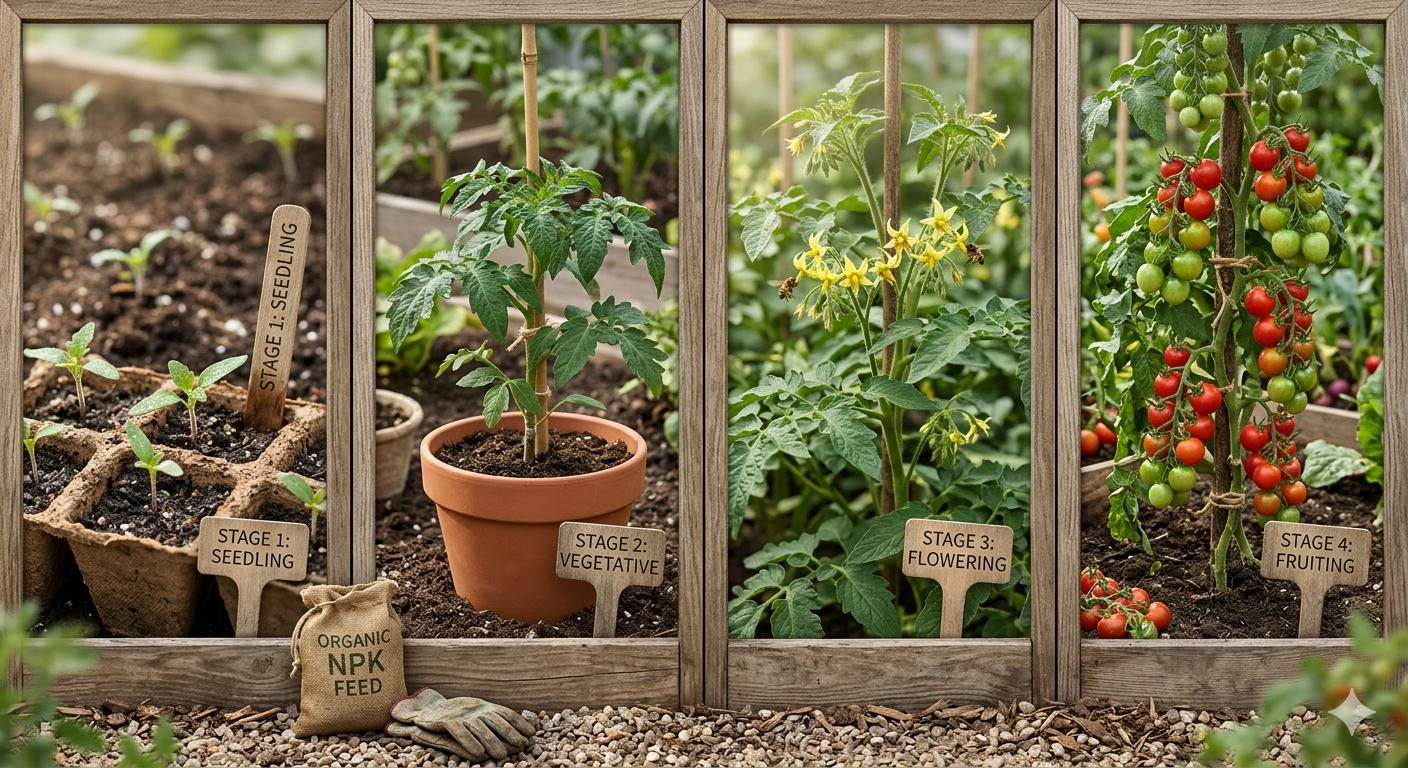
During vegetative growth, the plant is basically in construction mode. It's building roots, stems, leaves — the whole infrastructure. And the primary fuel for all of that is nitrogen.
So for the vegetative stage, you want a fertiliser with a higher N value. Something like a 3-1-2 ratio works well for a lot of plants, meaning nitrogen is dominant. For tomatoes specifically, many growers swear by an NPK ratio around 8-4-8 or even 10-5-8 during early vegetative stage. The exact numbers vary by plant, but the pattern is the same: nitrogen leads.
Phosphorus still matters here — it helps with root establishment. But you don't need to go heavy on it yet. And potassium? Keep it moderate. Enough to support healthy metabolism but not so high that you're locking out other nutrients.
One thing worth knowing: if you're growing in hydroponics, the vegetative stage NPK adjustments are even more noticeable because the plant has no soil buffer to fall back on. Whatever you put in the reservoir is basically what the plant gets. So precision actually matters more in hydro, not less.
For cannabis specifically (yes, we're going there — it's a high-search topic and the biology is relevant for any serious grower), the vegetative stage NPK is often quoted around 3-1-2. High nitrogen, modest phosphorus, moderate potassium. That pattern holds across most plants, honestly.
The Flowering Stage: This Is Where People Mess Up
Okay so here's where I see the most mistakes. People transition their plants to flowering — either by changing the light schedule or by the natural progression of the growing season — and they just... keep feeding the same vegetative nutrients. Then they wonder why they're getting lots of leaves and not much fruit or flower.
When a plant switches to reproductive mode, its priorities completely shift. It's no longer trying to build infrastructure. It's trying to produce flowers, set fruit, develop seeds. And for that, it needs phosphorus and potassium much more than nitrogen.
The classic bloom fertiliser ratio swings hard in the other direction. Something like 1-3-2 or 0-10-10 for peak flowering. The nitrogen actually gets dialled back deliberately, because too much nitrogen during flowering causes what growers call "nitrogen toxicity" — the plant keeps pushing vegetative growth when it should be flowering. You get dark, clawed leaves and poor bud/fruit development.
For tomatoes, the transition to flowering is usually signalled by the first flower clusters appearing. That's when you want to drop your nitrogen source and push phosphorus and potassium. A lot of commercial tomato growers shift to something like 5-10-10 at this point. Some go as far as 2-8-8 during peak fruit set.
Peppers are similar, though they tend to be slightly more forgiving. You can carry a bit more nitrogen into early flowering for peppers than you can for tomatoes without major consequences.
How to Actually Make the Transition (Practically Speaking)
Don't do it overnight. That's the first thing.
A sudden switch from a 3-1-2 ratio to a 0-5-5 will stress the plant. It's better to taper — spend a week or so on an intermediate ratio. Something like 2-2-3 or 1-3-2 as a transition feed, then move into the full bloom formula.
Also flush your growing medium (if you're in soil or coco) before switching. This is especially important if you've been heavy on nitrogen — there's residual nutrient buildup in the substrate that can interfere with the bloom transition. A plain water flush for one irrigation cycle helps reset things.
In hydroponics, this is actually easier because you just change the reservoir. Drain, clean, refill with bloom nutrients. Done.
For autoflowers — which flower based on age rather than light cycle — the timeline is compressed. You don't always get a clear vegetative phase to work with. Most autoflower growers start transitioning to bloom nutrients around week 3-4 even if the plant hasn't shown flowers yet, just to get ahead of the curve.
Growth Stage Fertiliser Quick Reference
To save you having to hunt through the rest of this post every time:
Seedling / Early Veg: Very low concentrations overall. Light nitrogen. Don't overdo it.
Full Vegetative Stage: High nitrogen, moderate phosphorus, moderate potassium. Something in the 3-1-2 or 4-2-3 range.
Transition (Pre-Flower): Start reducing nitrogen, bumping phosphorus. Maybe 1-2-2 or 2-3-2.
Full Flowering / Fruiting: Low nitrogen, high phosphorus, higher potassium. A bloom booster ratio like 1-3-2 or 0-5-4 is typical.
Late Flowering / Ripening: Some growers drop fertiliser almost entirely at this stage, doing a "flush" with plain water to clear residual salts and improve flavour (mainly relevant for cannabis, but some vegetable growers do this too).
A Note on Reading Fertiliser Labels (It's Confusing at First)
The NPK ratio printed on the bag is by percentage of total weight. So a 20 kg bag of 10-5-5 fertiliser contains 2 kg of elemental nitrogen, 1 kg of phosphorus (as P₂O₅ equivalent), and 1 kg of potassium (as K₂O equivalent).
The P and K numbers are reported as oxides, not as pure elements — which means if you're trying to be precise about nutrient delivery, there's a conversion factor involved. But for most practical gardening purposes, just working with the numbers on the label is fine.
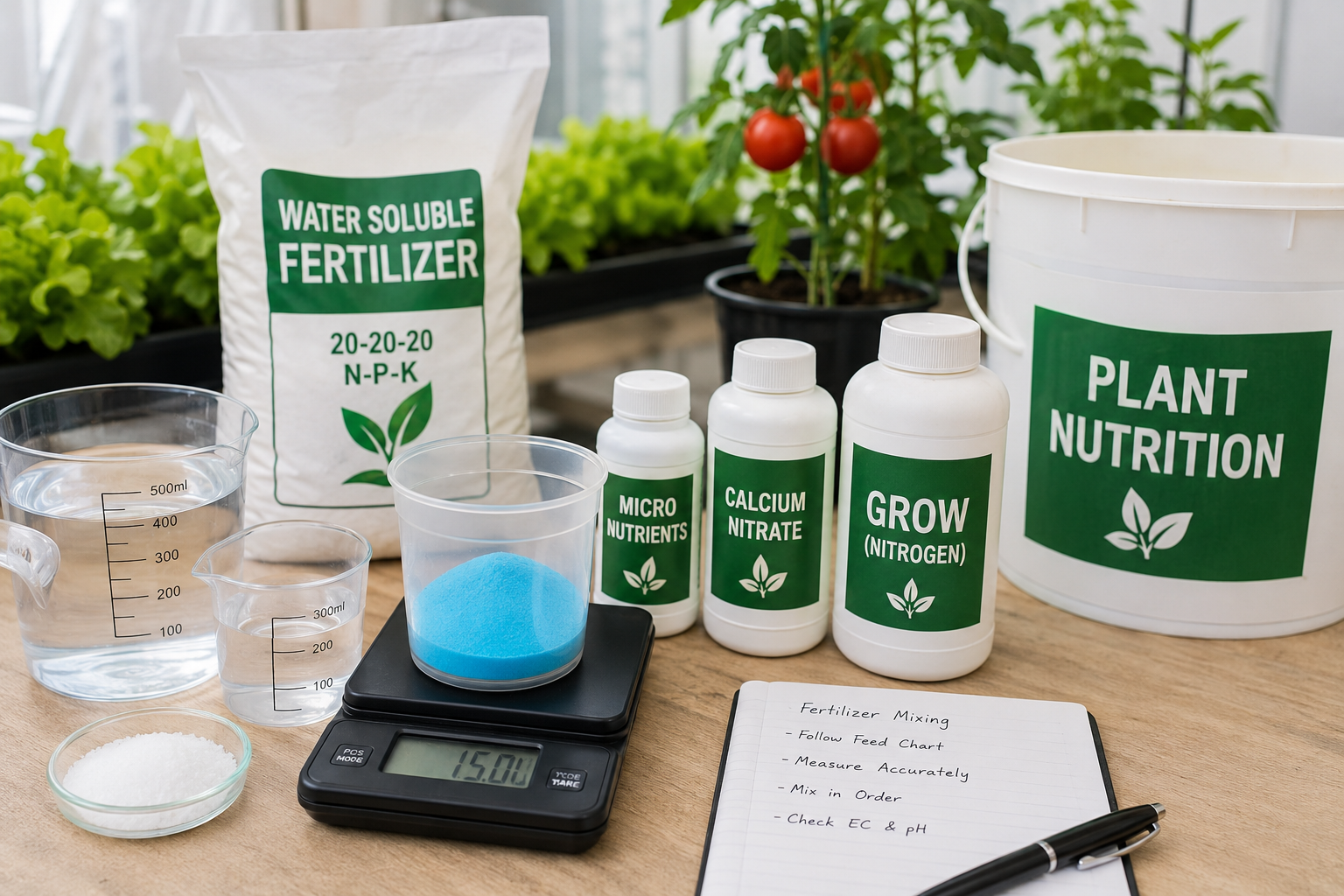
Liquid fertilisers are reported the same way, just in terms of concentration per volume rather than per weight. If you're mixing liquid bloom boosters, pay attention to the dilution rates — some of these are highly concentrated.
The Nitrogen Toxicity Problem (Don't Ignore This)
One more thing because it comes up constantly: nitrogen toxicity during flowering is probably the most common nutrient mistake I've seen people make.
Symptoms are pretty specific. The leaves go very dark green, almost blue-green. The tips start curling down and under — that's the classic "claw" shape. In flowering plants specifically, you'll notice the flowers are smaller than expected, or fruit set is poor even with good pollination.
The fix is straightforward but takes patience: flush the medium with plain water, then reintroduce nutrients at a lower nitrogen concentration. Don't try to "balance it out" by adding more phosphorus on top — just reduce the nitrogen first. The plant will recover faster than you think.
So When Exactly Do You Switch?
This is always the question and there isn't one perfect answer that works for every plant and every setup.
For outdoor vegetables like tomatoes and peppers, the transition typically aligns with when you first see flower buds forming. That's your cue.
For indoor grows under artificial lighting, the switch is usually tied to the light schedule change — moving from 18/6 (or 20/4) to 12/12 light/dark triggers flowering in photoperiod plants. Start transitioning nutrients about a week before or right at the same time as the light change.
For cannabis specifically, most experienced growers start the bloom formula right when they flip to 12/12, sometimes even a few days before.
For autoflowers, as mentioned: around week 3-4 regardless of visual cues, or as soon as you see the first pre-flowers forming.
Final Thought
Getting NPK right across growth stages isn't complicated once you understand the logic behind it. Plants need nitrogen to build, phosphorus and potassium to reproduce. That's basically the whole principle. The specific ratios vary by crop and by how picky you want to be about optimisation, but the directional shift is always the same: nitrogen down, P and K up, as you move toward flowering.
If you want to calculate exactly how much of a specific fertiliser you need to hit a target NPK ratio for your setup, our NPK fertiliser calculator can handle that for any fertiliser in our database. It'll save you the arithmetic.
Tags: NPK ratio, vegetative vs flowering nutrients, bloom booster, growth stage fertiliser, plant macronutrients, nitrogen vs phosphorus fertiliser, tomato NPK ratio, cannabis NPK ratio, hydroponics NPK adjustment, best NPK ratio for vegetative stage, best NPK ratio for flowering stage